Jump To Section
- Tired of Wilted Lettuce and Sky-High Grocery Bills? Welcome to Indoor Hydroponics.
- Why Choose Indoor Hydroponics? The 2026 Advantage
- Choosing the Right Hydroponic System for You
- Deep Water Culture (DWC)
- Nutrient Film Technique (NFT)
- Ebb and Flow (Flood and Drain)
- Drip System
- Aeroponics
- Setting Up Your Indoor Hydroponic Garden: A Step-by-Step Guide
- Essential Equipment for Your Indoor Hydroponic Garden (2026 Recommendations)
- Troubleshooting Common Hydroponic Problems
- The Future of Indoor Hydroponics: What’s Next?
Tired of Wilted Lettuce and Sky-High Grocery Bills? Welcome to Indoor Hydroponics.
Imagine harvesting fresh, vibrant greens in the dead of winter, all from the comfort of your living room. Indoor hydroponic gardening makes this a reality. Forget the limitations of soil, weather, and space. In 2026, hydroponics is no longer a futuristic fantasy; it’s a practical, sustainable, and increasingly popular way to grow food.
This comprehensive guide will walk you through everything you need to know to start your own thriving indoor hydroponic garden, from choosing the right system to troubleshooting common problems. Whether you’re a seasoned gardener or a complete beginner, we’ve got you covered.
Why Choose Indoor Hydroponics? The 2026 Advantage
- Year-Round Harvests: No more seasonal limitations. Grow your favorite fruits, vegetables, and herbs any time of year.
- Faster Growth Rates: Plants in hydroponic systems often grow significantly faster than in traditional soil-based gardens.
- Reduced Water Consumption: Hydroponics can use up to 90% less water than traditional gardening.
- Pest and Disease Control: Growing indoors minimizes exposure to pests and diseases, reducing the need for harmful pesticides.
- Space Efficiency: Hydroponic systems are ideal for small spaces, making them perfect for apartments, condos, and urban environments.
- Precise Nutrient Control: Tailor nutrient solutions to meet the exact needs of your plants, maximizing growth and yield.
- Less Weeding: Say goodbye to back-breaking weeding!
Choosing the Right Hydroponic System for You
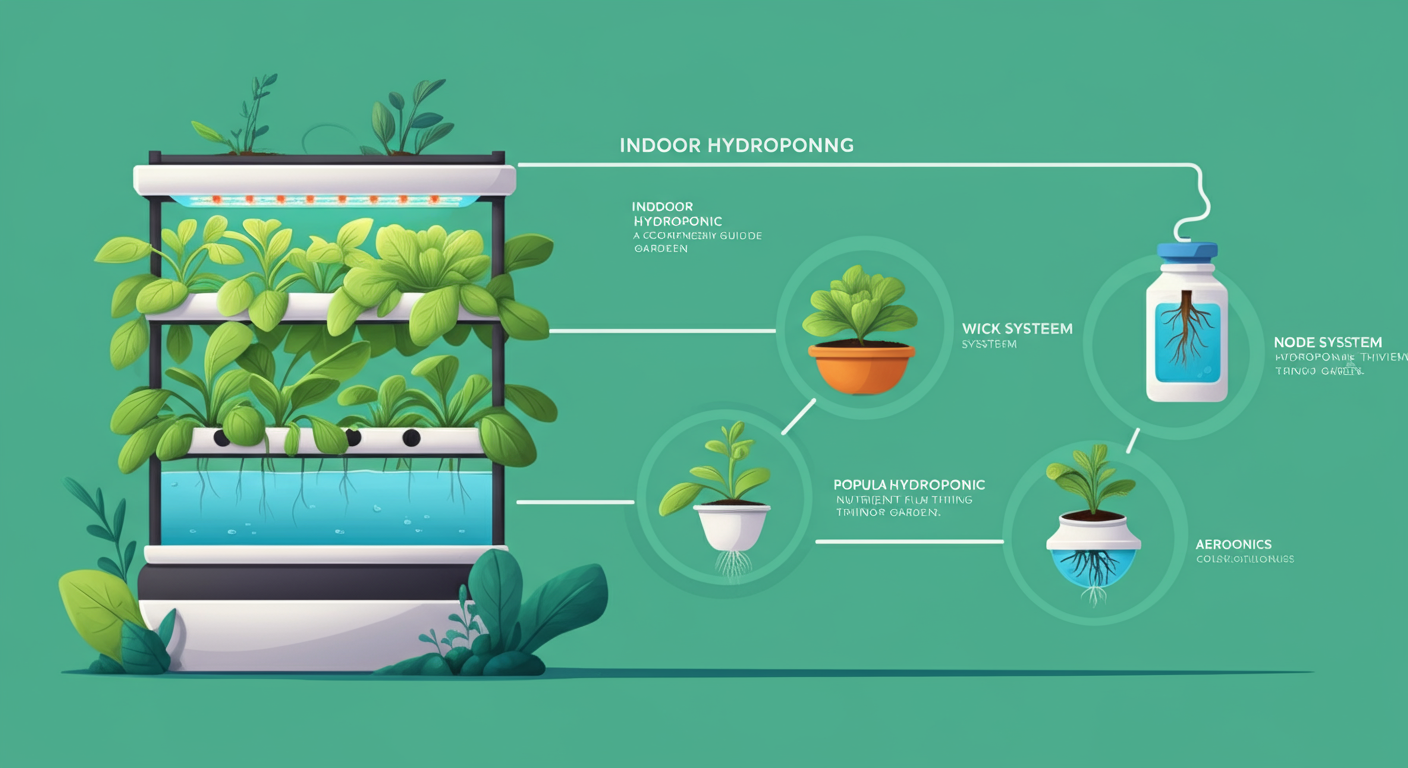
Several different hydroponic systems are available, each with its own advantages and disadvantages. Here’s a breakdown of the most popular options:
Deep Water Culture (DWC)
DWC is one of the simplest hydroponic systems. Plants are suspended in a nutrient-rich solution, with their roots submerged. An air pump and air stone provide oxygen to the roots.
- Pros: Easy to set up, inexpensive, good for leafy greens.
- Cons: Limited plant size, susceptible to temperature fluctuations.
Nutrient Film Technique (NFT)
In an NFT system, a shallow stream of nutrient solution flows continuously over the plant roots. This ensures that the roots have access to both nutrients and oxygen.
- Pros: Efficient nutrient delivery, good for leafy greens and herbs.
- Cons: Requires a reliable pump, susceptible to power outages.
Ebb and Flow (Flood and Drain)
Ebb and flow systems periodically flood the grow tray with nutrient solution, which then drains back into the reservoir. This provides the plants with a cyclical supply of nutrients and oxygen.
- Pros: Versatile, can be used for a wide variety of plants.
- Cons: Requires a timer and pump, prone to salt buildup.
Drip System
Drip systems deliver nutrient solution directly to the base of each plant through a network of tubes and emitters. This allows for precise control over nutrient delivery.
- Pros: Efficient water and nutrient use, good for larger plants.
- Cons: Requires more complex setup, prone to clogging.
Aeroponics
Aeroponics suspends plant roots in the air and sprays them with nutrient solution. This provides the roots with maximum access to oxygen.
- Pros: Fastest growth rates, efficient nutrient use.
- Cons: Most complex and expensive system, requires precise nutrient control.
Setting Up Your Indoor Hydroponic Garden: A Step-by-Step Guide
- Choose Your System: Consider your space, budget, and experience level when selecting a hydroponic system.
- Gather Your Supplies: You’ll need a grow tray or container, a reservoir, a pump (for some systems), an air pump and air stone (for DWC), growing media (such as rockwool or coco coir), nutrient solutions, and grow lights.
- Set Up Your System: Follow the instructions for your chosen system to assemble all the components.
- Prepare Your Nutrient Solution: Mix the nutrient solution according to the manufacturer’s instructions. Pro Tip: Use our
calculator to precisely determine the optimal nutrient concentration for your specific plants and system size, maximizing yield and minimizing waste. Accurate nutrient measurements lead to fewer deficiencies and toxicities!
- Plant Your Seedlings: Start your seeds in a separate seed starting tray and transplant them into your hydroponic system once they have developed a few true leaves.
- Provide Adequate Lighting: Use grow lights to provide your plants with the light they need to grow. LED grow lights are the most energy-efficient and long-lasting option.
- Monitor and Maintain: Regularly check the pH and nutrient levels of your solution, and adjust as needed. Also, monitor your plants for any signs of pests or diseases.
Essential Equipment for Your Indoor Hydroponic Garden (2026 Recommendations)
- LED Grow Lights: Choose full-spectrum LED grow lights with adjustable intensity to meet the changing needs of your plants.
- pH Meter: Accurately measure the pH of your nutrient solution. Aim for a pH of 5.5-6.5 for most plants.
- EC Meter (TDS Meter): Measure the electrical conductivity (EC) or total dissolved solids (TDS) of your nutrient solution to ensure the correct nutrient concentration.
- Air Pump and Air Stone: Provide oxygen to the roots in DWC systems.
- Timer: Control the timing of your grow lights and pumps. Smart timers with app integration are becoming increasingly popular for remote monitoring.
- Water Pump: Circulate nutrient solution in NFT, ebb and flow, and drip systems.
- Growing Media: Choose a suitable growing medium, such as rockwool, coco coir, or clay pebbles.
Troubleshooting Common Hydroponic Problems
- Nutrient Deficiencies: Yellowing leaves, stunted growth, or unusual coloration can indicate nutrient deficiencies. Use a nutrient solution specifically formulated for hydroponics and adjust the concentration as needed.
- pH Imbalance: An incorrect pH can prevent plants from absorbing nutrients. Use pH up or pH down solutions to adjust the pH of your nutrient solution.
- Algae Growth: Algae can compete with your plants for nutrients and oxygen. Keep your reservoir covered and use an algaecide if necessary.
- Root Rot: Root rot is a fungal disease that can damage plant roots. Ensure adequate aeration and avoid overwatering.
- Pests: Even indoors, pests can occasionally infest your hydroponic garden. Use organic pest control methods to eliminate pests.
The Future of Indoor Hydroponics: What’s Next?
In 2026, indoor hydroponics is poised for even greater growth and innovation. Expect to see:
- Increased Automation: Smart hydroponic systems with automated nutrient delivery, pH control, and lighting adjustments.
- Advanced Sensors: Real-time monitoring of plant health and environmental conditions using sophisticated sensors.
- Vertical Farming: Large-scale indoor farms utilizing vertical space to maximize crop production.
- AI-Powered Gardening: Artificial intelligence algorithms that optimize growing conditions for maximum yield and efficiency.
Ready to embark on your indoor hydroponic gardening adventure? With the right knowledge and equipment, you can create a thriving garden that provides you with fresh, healthy food all year round. Happy growing!
Leave a Reply