Jump To Section
- Tired of limp lettuce and flavorless tomatoes from the grocery store?
- What is Hydroponics, Exactly?
- Why Choose Indoor Hydroponics in 2026?
- Types of Indoor Hydroponic Systems
- Deep Water Culture (DWC)
- Nutrient Film Technique (NFT)
- Ebb and Flow (Flood and Drain)
- Drip System
- Aeroponics
- Setting Up Your Indoor Hydroponic Garden
- 1. Choose Your System and Location
- 2. Gather Your Supplies
- 3. Assemble Your System
- 4. Prepare Your Nutrient Solution
- 5. Plant Your Seedlings or Clones
- 6. Monitor and Maintain Your System
- Lighting Your Indoor Garden
- Choosing the Right Nutrients
- Common Problems and Solutions
- The Future of Indoor Hydroponics (2026 and Beyond)
Tired of limp lettuce and flavorless tomatoes from the grocery store?
Imagine harvesting crisp, vibrant greens and juicy, sun-ripened (indoor-ripened!) fruits right from your own home, 365 days a year. Indoor hydroponic gardening makes this a reality, regardless of your climate or outdoor space. This comprehensive guide will walk you through everything you need to know to get started and thrive in the world of soilless cultivation in 2026.
What is Hydroponics, Exactly?
At its core, hydroponics is the art and science of growing plants without soil. Instead of relying on soil for nutrients, the plant roots are submerged in, or regularly exposed to, a nutrient-rich water solution. This allows plants to access everything they need directly, leading to faster growth, higher yields, and less susceptibility to soil-borne diseases.
Why Choose Indoor Hydroponics in 2026?
- Year-Round Growing: Say goodbye to seasonal limitations! Control the climate and light to grow your favorite crops any time of the year.
- Space Efficiency: Perfect for apartments, condos, and urban dwellers. Vertical systems maximize yields in minimal space.
- Higher Yields: Plants in hydroponic systems often grow faster and produce more than their soil-grown counterparts due to optimized nutrient delivery.
- Water Conservation: Hydroponic systems can use significantly less water than traditional gardening.
- Reduced Pest and Disease Issues: Without soil, you eliminate many common soil-borne pests and diseases.
- Controlled Environment: Precise control over temperature, humidity, and lighting ensures optimal growing conditions.
Types of Indoor Hydroponic Systems
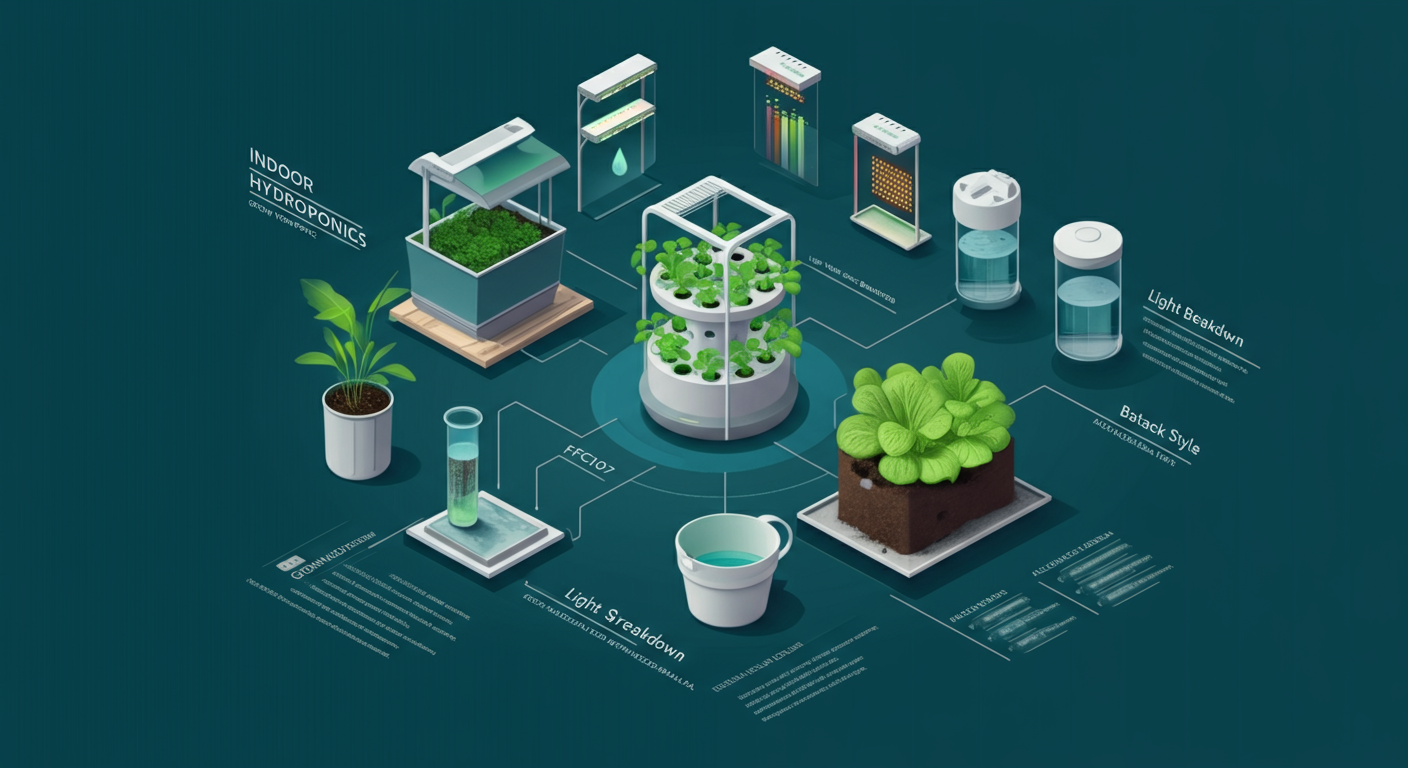
Choosing the right system is crucial for success. Here’s a breakdown of popular options:
Deep Water Culture (DWC)
Simple and beginner-friendly. Plants are suspended in a container of nutrient solution, with an air pump providing oxygen to the roots. Best for leafy greens like lettuce and herbs.
Nutrient Film Technique (NFT)
A shallow stream of nutrient solution flows continuously over the plant roots. Ideal for smaller plants like herbs, strawberries, and lettuce. Requires consistent monitoring of the nutrient solution.
Ebb and Flow (Flood and Drain)
The growing tray is periodically flooded with nutrient solution and then drained back into a reservoir. Versatile system suitable for various plants, including larger fruiting vegetables.
Drip System
Nutrient solution is delivered directly to the base of each plant through small drippers. Efficient and allows for precise control over nutrient delivery. Well-suited for larger plants like tomatoes, peppers, and cucumbers.
Aeroponics
Plant roots are suspended in the air and periodically sprayed with nutrient solution. Highly efficient in terms of water and nutrient use but requires more technical expertise. Can be used for most plants.
Setting Up Your Indoor Hydroponic Garden
Ready to get your hands dirty (or rather, wet!)? Here’s a step-by-step guide:
1. Choose Your System and Location
Consider your space, budget, and the types of plants you want to grow. A well-lit area is essential, or you can supplement with grow lights.
2. Gather Your Supplies
You’ll need:
- Hydroponic system (pre-built or DIY)
- Nutrient solution (specifically formulated for hydroponics)
- Grow media (rockwool, coco coir, perlite, etc.)
- Grow lights (LEDs are energy-efficient and long-lasting)
- Air pump and air stone (for DWC systems)
- pH meter and TDS meter (for monitoring nutrient solution)
- Timer (for grow lights and pumps)
3. Assemble Your System
Follow the instructions for your chosen system. Ensure all connections are secure and leak-proof.
4. Prepare Your Nutrient Solution
Carefully follow the instructions on the nutrient solution package. Use a pH meter to adjust the pH to the optimal range for your plants (typically 5.5-6.5). Monitor the TDS (Total Dissolved Solids) to ensure the nutrient concentration is correct. This is where the
calculator can be invaluable. Simply input your target crop, system type, and water source, and it will provide a precise nutrient solution recipe tailored to your needs, saving you time and preventing costly errors. This calculator takes into account the latest advancements in hydroponic nutrient formulations for 2026, ensuring your plants receive the optimal balance of macro and micronutrients.
5. Plant Your Seedlings or Clones
Start with healthy seedlings or clones from a reputable source. Gently transfer them to your chosen grow media within the hydroponic system.
6. Monitor and Maintain Your System
Regularly check the pH and TDS of your nutrient solution. Adjust as needed. Inspect your plants for signs of pests or diseases. Prune and train your plants as necessary.
Lighting Your Indoor Garden
Grow lights are essential for indoor hydroponic gardening. LED grow lights are the most popular choice due to their energy efficiency, long lifespan, and full-spectrum light output. Consider the size of your growing area and the light requirements of your plants when selecting grow lights.
Choosing the Right Nutrients
Hydroponic nutrients are specially formulated to provide plants with all the essential elements they need for growth. Look for complete nutrient solutions that contain both macro and micronutrients. Remember to adjust the nutrient concentration based on the stage of plant growth. Again, leveraging the [WIDGET_HERE] is critical here to ensure correct PPM and pH values.
Common Problems and Solutions
Even the most experienced hydroponic gardeners encounter challenges. Here are some common problems and how to address them:
- Nutrient Deficiencies: Yellowing leaves, stunted growth, or other discoloration can indicate nutrient deficiencies. Use a nutrient solution specifically formulated for hydroponics and adjust the concentration as needed. Regularly use the [WIDGET_HERE] to preemptively prevent deficiencies by creating tailored solutions.
- pH Imbalance: Incorrect pH can prevent plants from absorbing nutrients. Use a pH meter to monitor the pH and adjust it using pH up or pH down solutions.
- Algae Growth: Algae can compete with plants for nutrients and oxygen. Keep your system clean and use opaque containers to prevent light from reaching the nutrient solution.
- Pests and Diseases: While hydroponics reduces the risk, pests and diseases can still occur. Use organic pest control methods and ensure good air circulation.
The Future of Indoor Hydroponics (2026 and Beyond)
Indoor hydroponics is rapidly evolving with advancements in technology and research. Expect to see increased automation, AI-powered monitoring systems, and new, more efficient lighting solutions. Vertical farming and urban agriculture will continue to grow in popularity, bringing fresh, locally grown produce to communities around the world. Learning and adapting to these changes will be crucial for long-term success.
Ready to embark on your indoor hydroponic gardening journey? With a little planning and effort, you can enjoy fresh, homegrown produce year-round. Don’t forget to utilize the [WIDGET_HERE] calculator to optimize your nutrient solutions and maximize your yields!
Leave a Reply